
The ocean is vast and endless, providing refuge to many organisms and attracting every living being towards itself. Why not be attracted? The ocean is where it all began. It will be no surprise if one decides to live at sea. However, choosing the sea as an abode is not that easy. The sea is not only the abode of beautiful creatures like clown fish, sea horses, and algae but it is also dominated by countless marine monsters, ranging from Rorquals and Giant Oarfish to Japanese Spider crabs.
We are going to explore some 11 fearless marine monsters in the world residing at the bottom of the sea. These behemoths are not only enormous in size, but most of them are very dangerous.
11. Ocean Sunfish: 10.82ft/3.3m
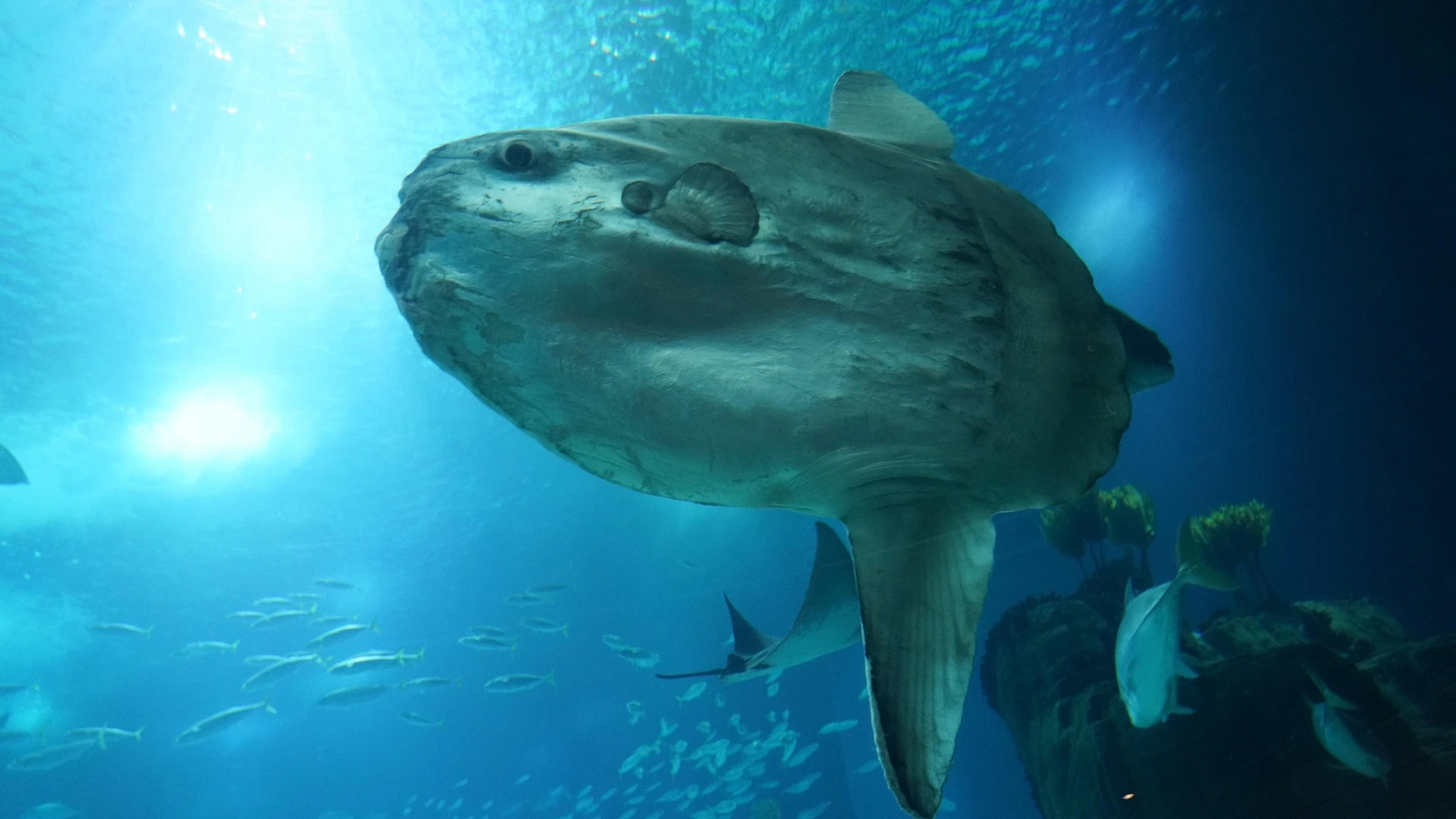
Ocean Sunfish | Image Credit : Pixabay | Image By : makabera
The Ocean sunfish belongs to the Molidae family, one of the largest bony fish in the world. Ocean sunfish are also known as Mola Mola, but affectionately, they are known as the swimming head. An ocean sunfish is a tailless fish with an astonishingly large head whose main body is flattened. These fish are 10.82 ft long with an astonishing weight of up to 2300 kilos. You’re probably wondering how a fish with such a huge body can swim without a tail in the water. Unlike other fish, ocean sunfish do not have caudal fins. Their caudal fin has been replaced with a rudder-like structure. Ocean sunfish use their powerful dorsal and anal fins to swim in the ocean. Ocean sunfish are found in both tropical and temperate regions around the world. Their primary diets are jellyfish and zooplankton. The female Ocean Sunfish may lay up to 30,00,00,000 eggs at a time, the most of any vertebrate.
10. Japanese Spider Crab: 12.1ft/3.7m
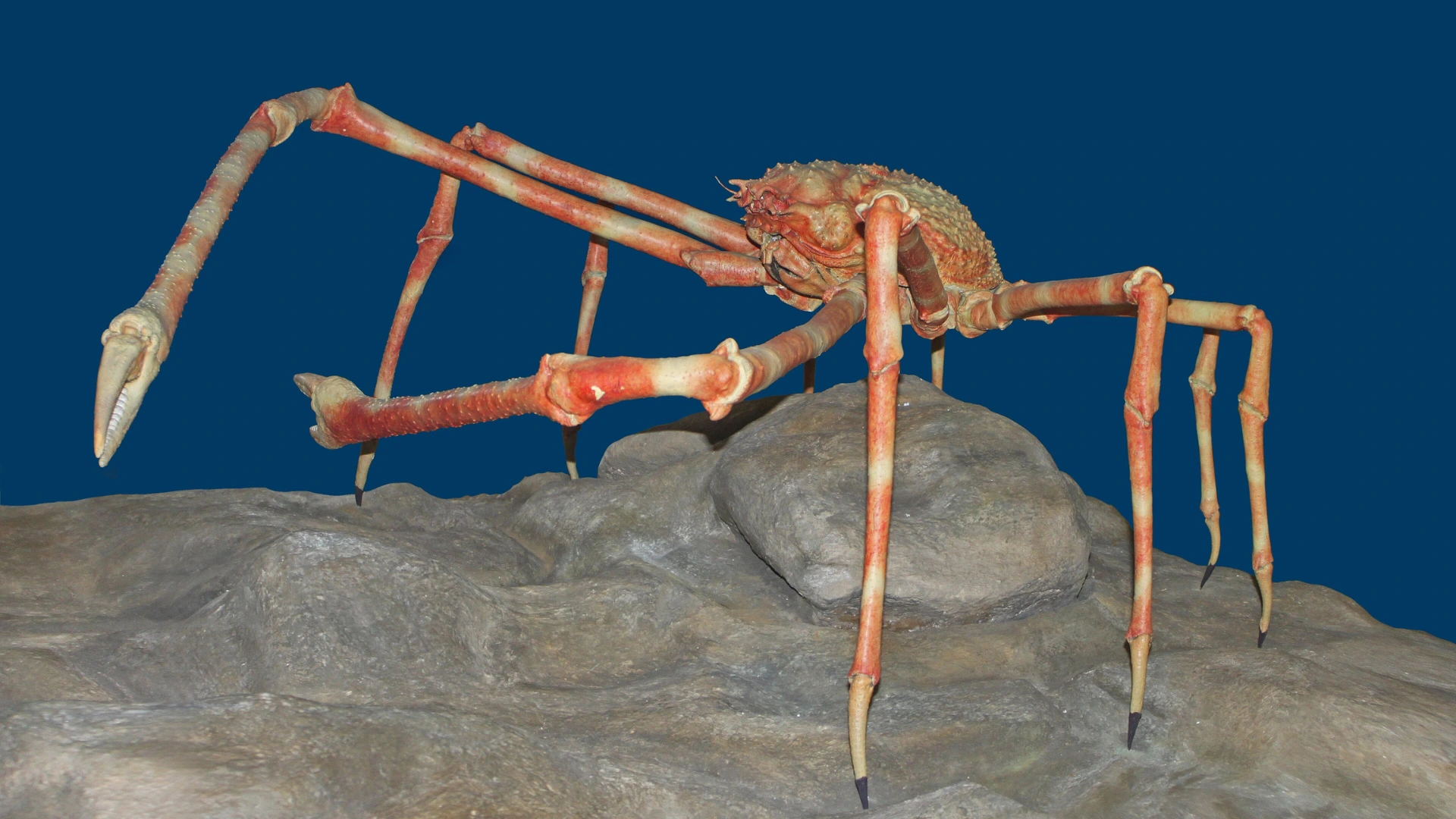
Japanese Spider Crab | Image Credit : Wikipedia | Image By : H. Zell (CC BY-SA 3.0 )
If you are suffering from arachnophobia, then you should stay away from these 8-legged arthropods known as Japanese Spider Crabs. It is a species of marine crab that is found mainly from Tokyo Bay to Kagoshima Prefecture on Honshu Island, Japan. However, some populations have been observed in Taiwan’s Iware Prefecture and Su-Ao. An adult Japanese Spider Crab can be found at a depth of 160 ft. to 1970 ft. These arthropods, which belong to the Inchidae family have the largest leg-span crabs among all the arthropods in the world, whose claw to claw has a leg span of up to 3.7 meters, i.e., 12.1 feet. However, their main body grows up to 40 cm, i.e., 16 inches in length, and weighs up to 19 kilos. Being omnivorous, they consume both plants and animals. They help in maintaining the ecosystem by consuming dead animals. Japanese people call them “Taka-Ashi-Gani,” which means “crab with long legs.”
09. Killer Whale: 26ft/8m
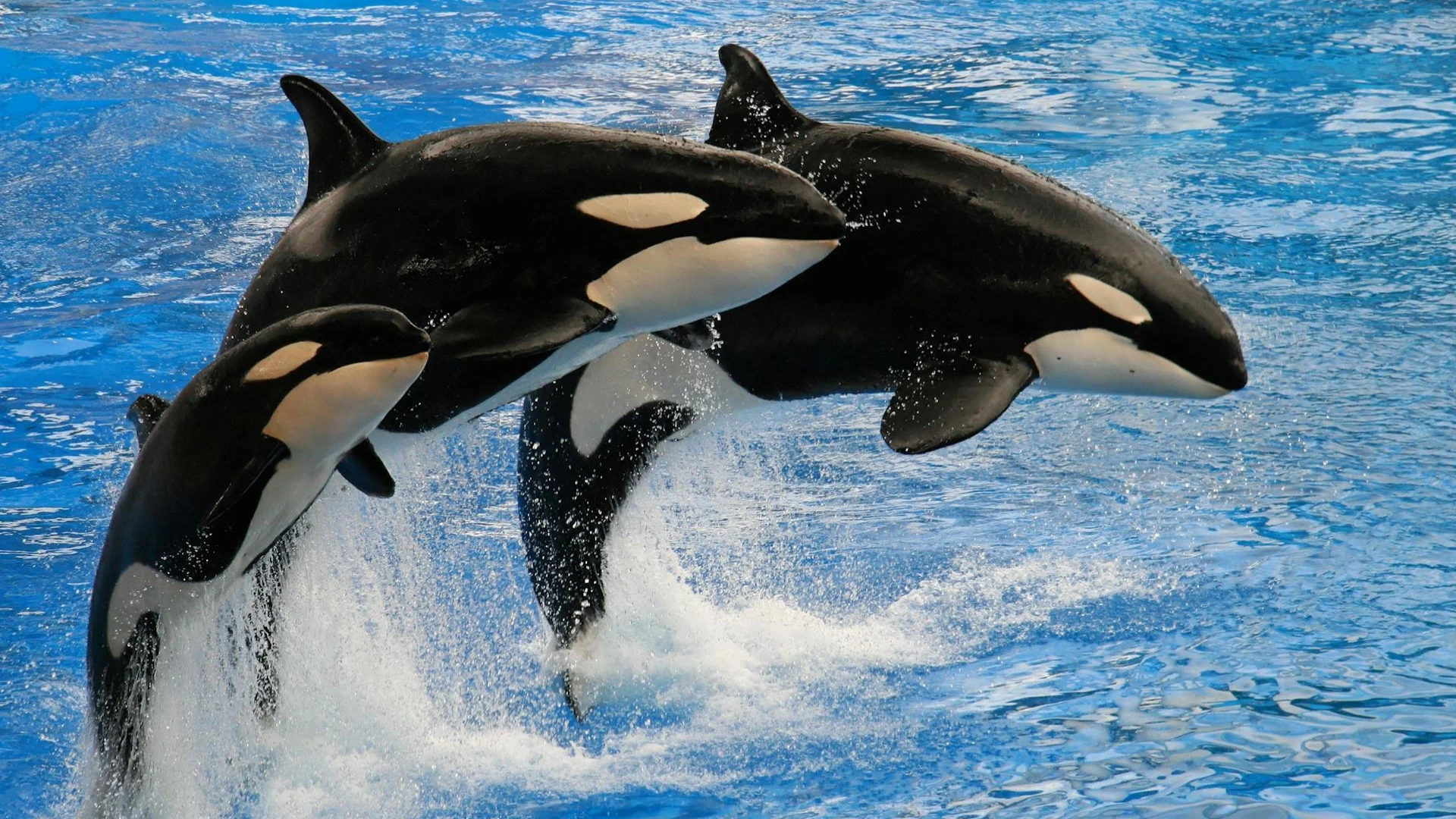
Killer Whale | Image Credit : Pexels | Image By : Holger Wulschlaeger
The Killer Whale is commonly known as the “Orca”. A killer whale is one of the world’s largest and most powerful predators. Killer whales are found in all oceans. While they are most abundant in cold waters such as Antarctica, Norway, and Alaska, they are also found in tropical and subtropical waters. The orca is the last large-sized member of all the dolphin species, measuring up to 8 meters (26 feet) in length and weighing up to 4 tonnes. The Killer Whale belongs to the Delphinidae family of oceanic dolphins. Their bodies are black with a white underside, with patches near their eyes. A killer whale is an apex predator that will target both calves and adults of baleen whales. Marine mammals like seals and dolphins are their favorite prey.
08. Giant Mantra Ray: 29ft/8.8m
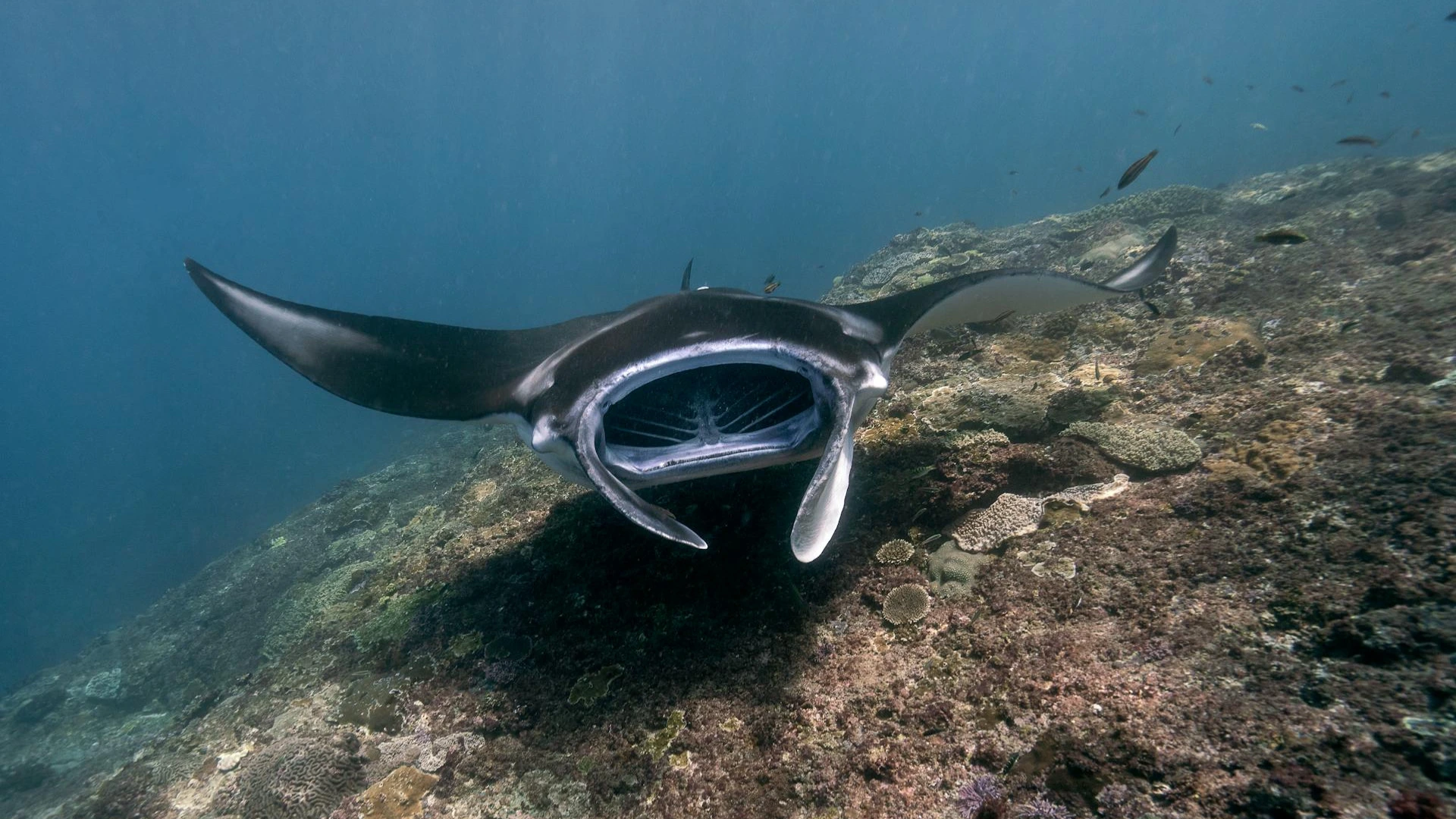
Giant Mantra Ray | Image Credit : Pexels | Image By : Emma Li
The Giant Mantra Ray is a species of ray that belongs to the Mobulidae family. These species of the ray are the world’s largest rays, with a wingspan of up to 8.8 meters (i.e., 29 feet). With a weight of up to 3000 kilos and a huge size of up to 29 feet, it introduces itself as a Marine Monster. It is not only enormous in size; its brain is the largest among all other fish in the world. Their natural habitat is in tropical and temperate areas of the vast ocean, where zooplankton abounds. Every week, a Giant Mantra Ray consumes up to 13% of its body weight in zooplankton forms such as shrimp, krill, and crab. They are also known by the names “Giant Oceanic Manta Ray,” “Giant Manta Ray,” and “Ocean Manta Ray.”
07. Giant Pacific Octopus: 32.15ft/9.8m
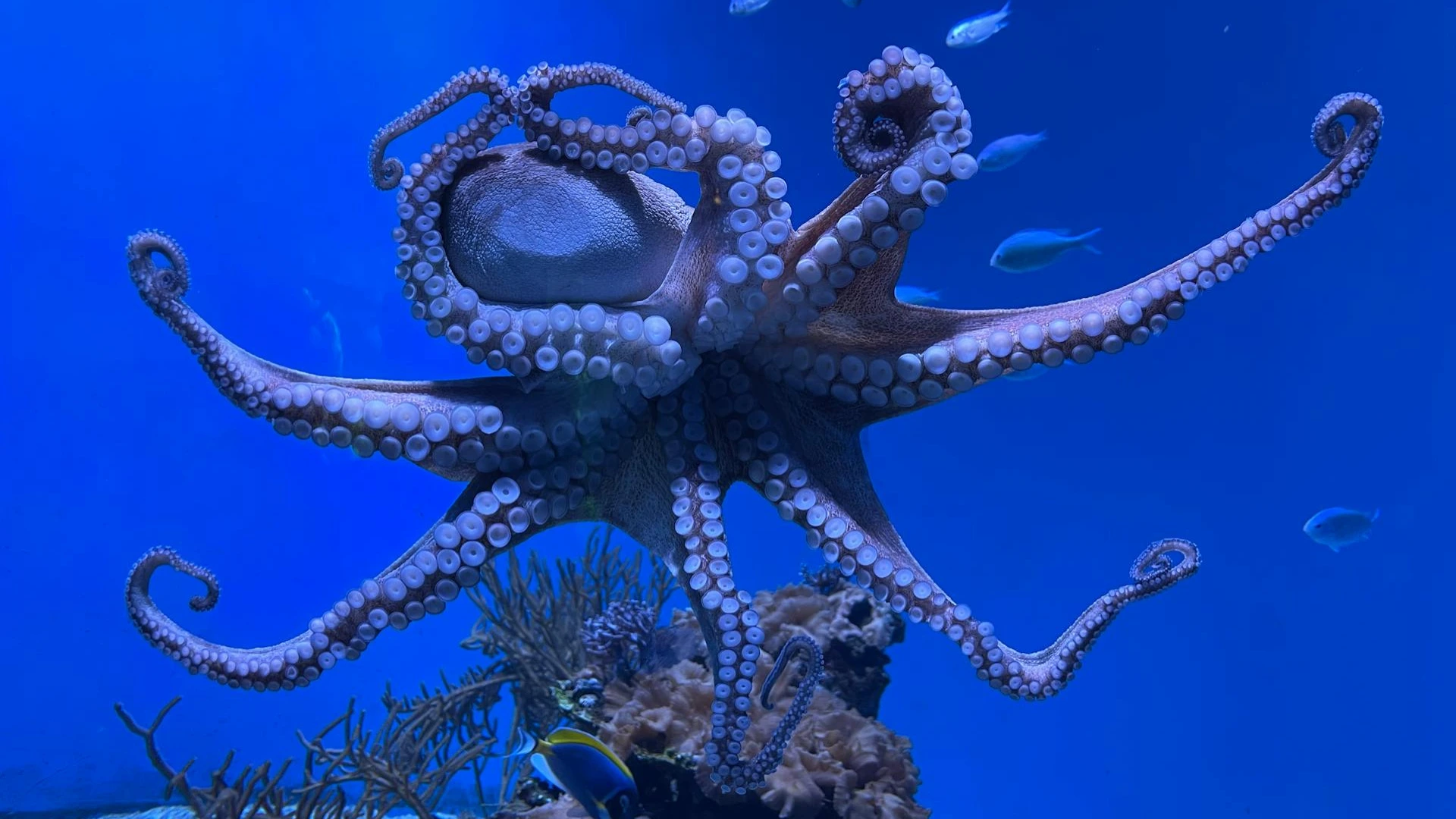
Giant Pacific Octopus | Image Credit : Pexels | Image By : Ashley Christiano
The Giant Pacific Octopus is the largest marine cephalopod. Their radicals can spread up to 32 feet and weigh more than 600 pounds. They are also known as the North Pacific Octopus, and they’re found along the coasts of California, Oregon, Washington, British Columbia, Alaska, Russia, Japan, and the Korean Peninsula. They like to live in cold water up to 2000 meters, i.e., 6,600 feet deep from the seashore. Their major food consists of shrimp, crabs, scallops, abalone, cockles, snails, clams, fish, lobsters, and other octopuses. This octopus, which belongs to the Enteroctopodidae family, has the longest lifespan of any octopus species. Age and huge size are not only their unique abilities; these octopuses are the kings of camouflage. They utilize this technique to defend themselves. Giant Pacific Octopus is the most intelligent of all the invertebrates in the world and can easily open jar lids, solve mazes, and play with toys.
06. Giant Oarfish: 56ft/17m
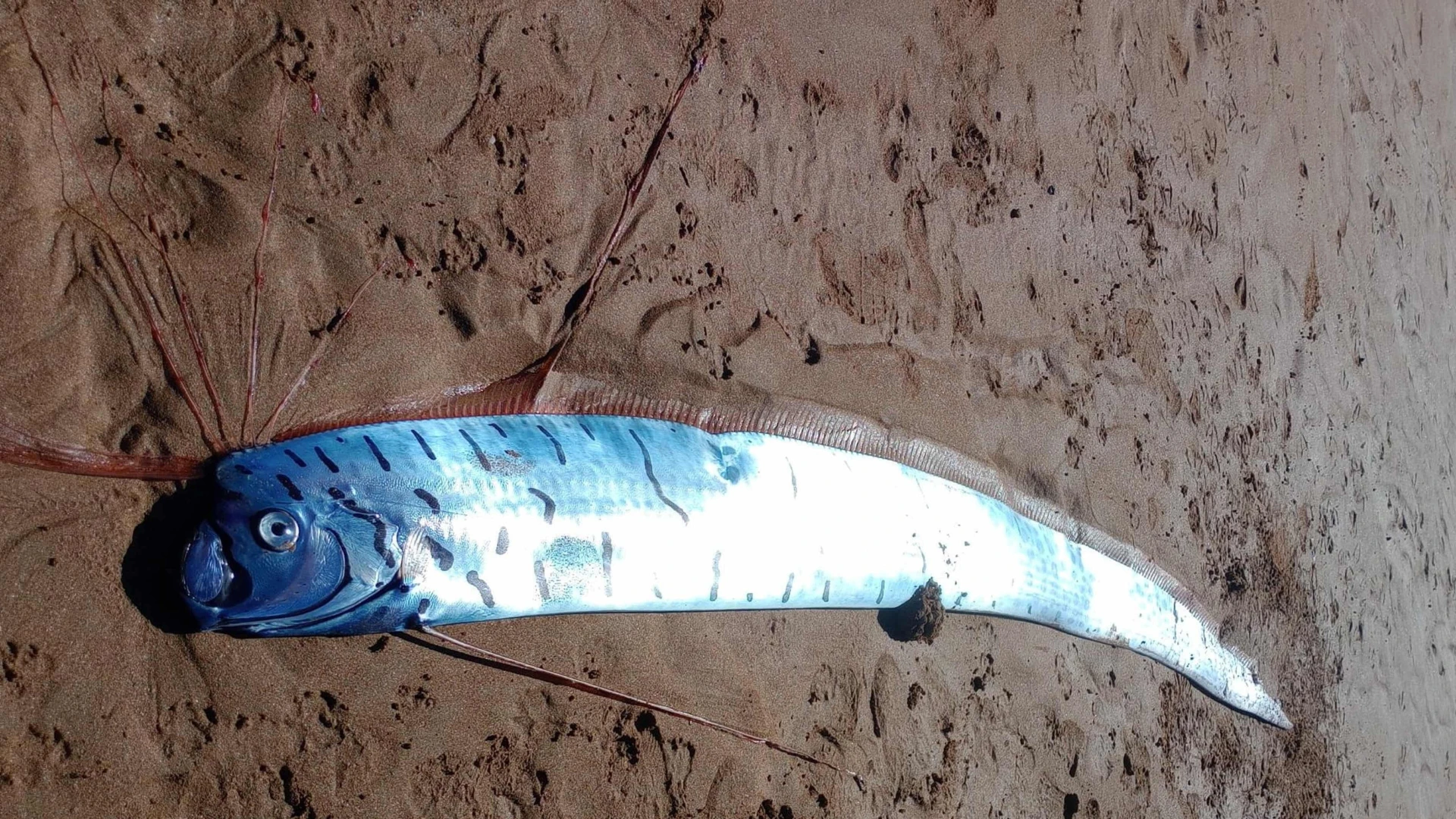
Giant Oarfish | Image Credit : Tony Cheesman
The Giant Oarfish is an Oceanodromous species of fish that inhabits all marine areas of the world except the polar regions. The odd-shaped Giant Oarfish is popularly known as the Sea Serpent, Sea Dragon, or Sea Monster. Belonging to the Regalecidae family, these fish are known by many names, including Pacific Oarfish, King of Herrings, Ribbon Fish, and Streamer Fish. With an enormous length of 56 feet, it is the longest bony fish in the world. It has a ribbon-like appearance but does not have scales on its body. These longest bony fish prefer to live at depths of about 3,300 feet and rarely come to the surface. However, they are also known for their eyes, which allow them to see clearly in complete darkness. Adults prefer to live in solitude. The Gaint Oarfish eats small fish and squid, but its primary diet consists of krill and other crustaceans.
05. Colossal Squid: 59ft/18m
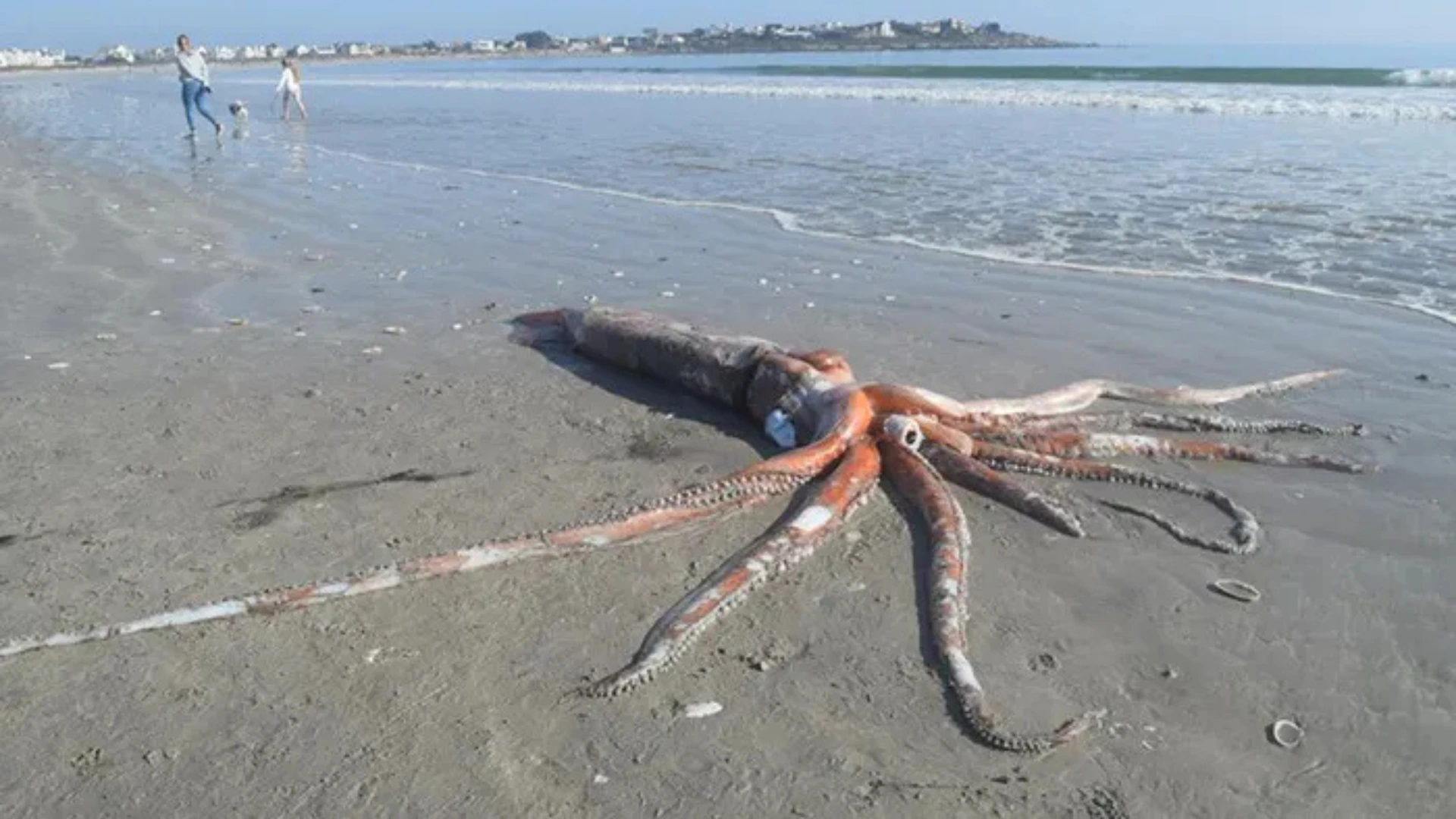
Colossal Squid | Image Credit : Adéle Grosse
The colossal squid belongs to the family Cranchiidae, which are believed to be the world’s largest species of squid on the basis of mass. The largest of these elusive monsters ever found measured 59 feet in length and about a tone in weight. Analysis revealed that enormous squid weighed more than 700 kilos, heavier than the sperm whale’s stomach. It lives on almost all the seas of the world. Their recognized range extends from northern Antarctica to southern South America, southern Africa, and the southernmost point of New Zealand. Their main diet is Chaetognatha and large fish, including the Patagonian toothfish and species of small squid that use bioluminescence in the deep ocean. The colossal squid has multiple sets of records. They are not only the largest invertebrate on Earth, but they also have the largest eyes of any animal, larger even than those of the great whales.
04. Sperm Whale: 78.74ft/24m
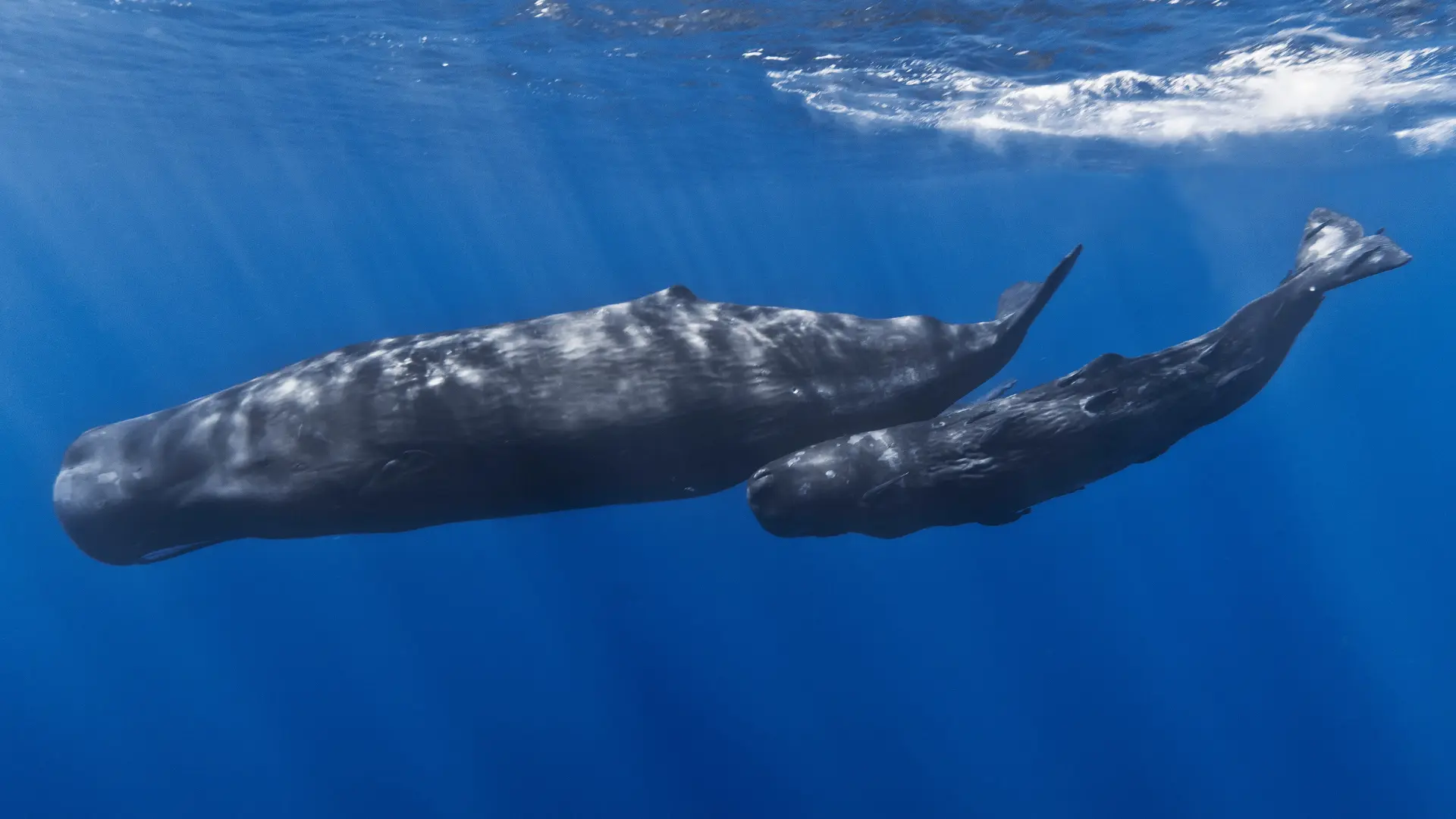
Sperm Whale | Image Credit : Flickr | Image By : Gabriel Barathieu
The sperm whale, also known as Cachalot. They are the largest toothed whales in the world as well as the largest toothed predators, and they may reach a length of 80 feet. When you sit at the end of their body, you will feel that you are standing on the street, and in height, it looks like an eight-story building. Sperm whales belong to the Physeteridae family and are the only remaining surviving members of the Physeter gene. The sperm whale is a pelagic mammal that travels throughout its worldwide range for food and reproduction. Sperm whales have made plenty of records. Their whittling calls are up to 230 decibels underwater, which will produce 170 decibels of sound on land. It is more than a shot from a rifle gun. In simple words, it is the loudest animal in the world. Their brains, which can weigh up to 20 pounds, are also the biggest and heaviest of any other animals on earth. The Sperm Whale feeds on Giant Squid, Colossal Squid, Octopuses, and fish like Demersal Rays. But their main food is medium-sized squid. Cachalots have a 2 hours breathing holding capacity, and this skill helps them to reach a depth of 3 kilometers in water.
03. Fin Whale: 89.6ft/27.3m
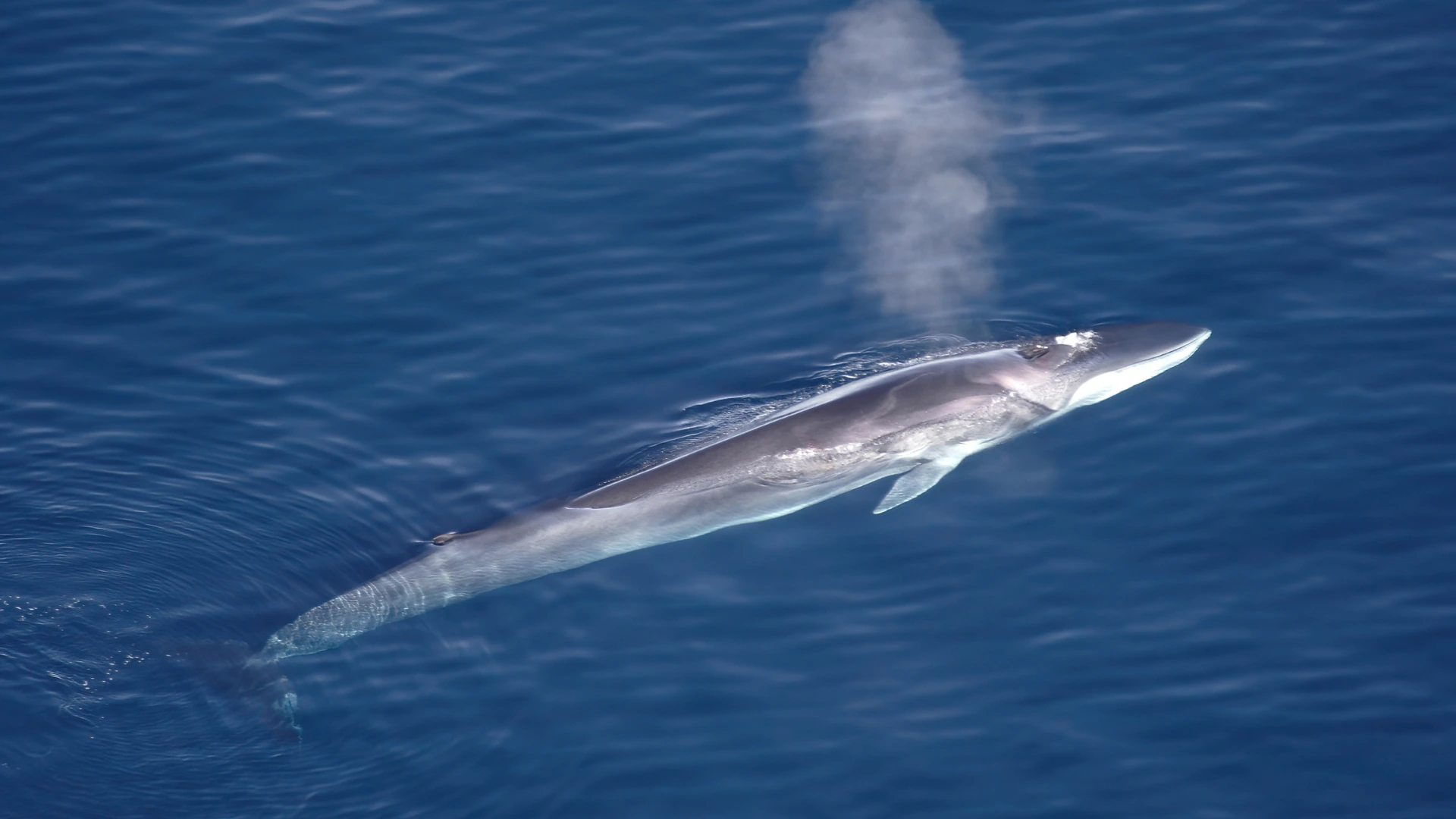
Fin Whale | Image Credit : Flickr | Image By : Visit Greenland
The Fin Whale is a member of the Balaenopteridae family, which is the second-largest species in the world. Their size is reported to be 89.6 feet, i.e., 27.3 meters, but their confirmed maximum length is 85 feet, i.e., 25.9 meters. The heaviest weight ever recorded was 74 tonnes, but experts believe it might reach 114 tonnes. The Fin Whale is among the fastest cetaceans, with a usual swimming speed of 37 to 41 km/h, and they can boost their speed up to 46 km/hr. The Fin Whale has an attractive and slender body that resembles a racing yacht. Due to their swiftness, they have earned the nickname “The Greyhound of the Sea,” given by the American naturalist Roy Chapman. Like other rorquals, the fin whale is a cosmopolitan species that inhabit all of the world’s oceans, from polar to tropical waters. A fin whale needs 2000 kilos of krill every day to fill its large stomach. Yes, 2000 kilos! However, apart from krill, crustaceans, squid, and fish are also part of their diet list. Fin whales are also known by the names finback whales and common rorqual. Apart from these names, they were known as the Herring Whale and the Razorback Whale.
02. Blue Whale: 98ft/29.9m
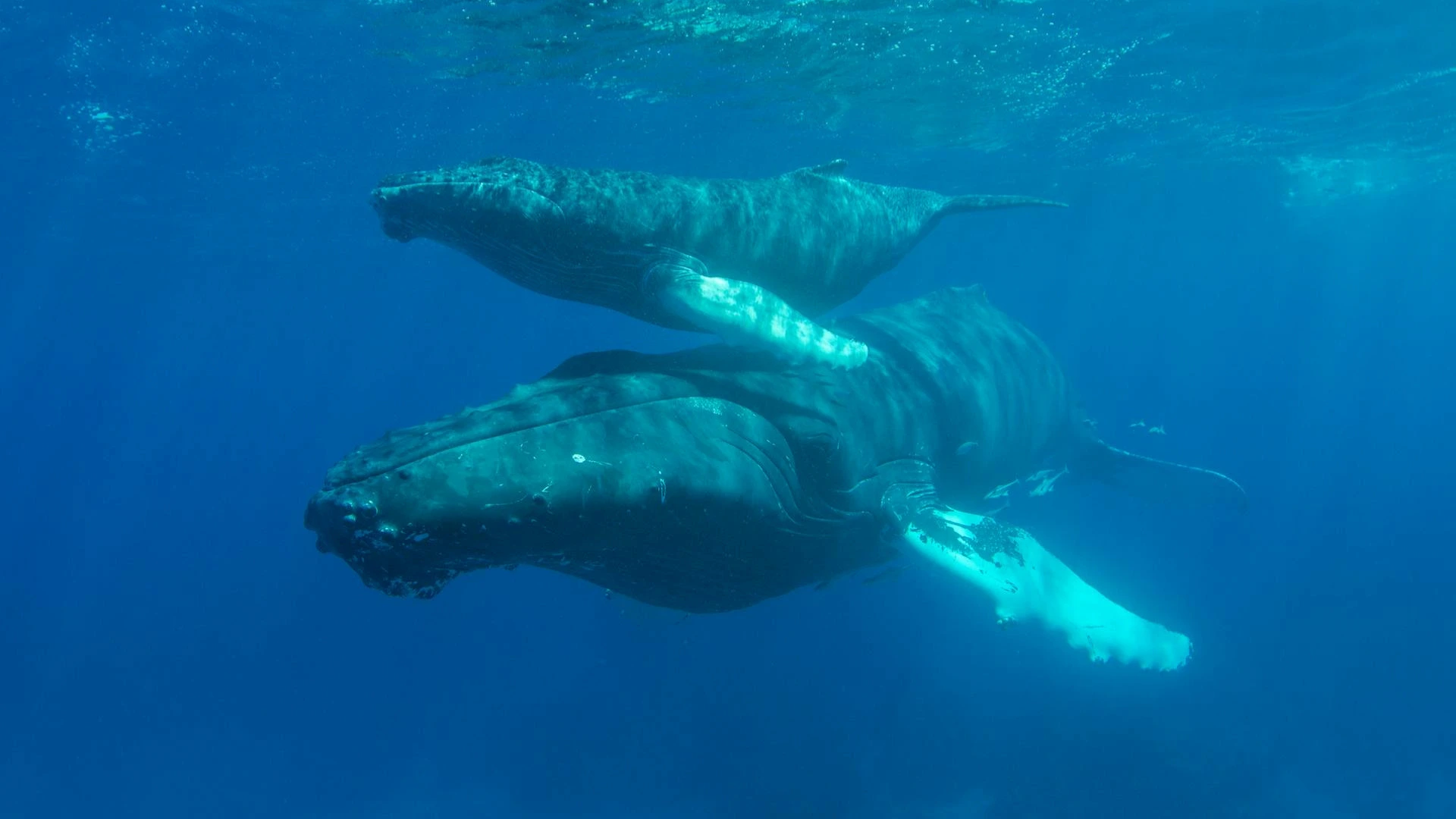
Blue Whale | Image Credit : Pexels | Image By : Ben Phillips
The Blue Whale is a marine mammal that belongs to the Balaenopteridae family. The Blue Whale is not only the largest animal in the world, but it is also the largest animal ever to exist on Earth. It grows up to about 100 feet and is flexible to 200 tons. The weight of their tongues is equal to that of an elephant, and the weight of their hearts is equal to that of an automobile. Perhaps you’re wondering what this enormous creature eats? Let me tell you, this behemoth enjoys eating krill and they consume 4 tonnes of krill per day. The Blue Whale lives at a depth of 1640 feet in all the oceans except the Arctic Ocean. The Blue Whale actually belongs to the Rorquals species, whose other living members include whales like Fin Whale, Sie Whale, Bryde’s Whale, Eden’s Whale, Common Minke Whale, Antarctic Minke Whale, Omura’s Whale, and Humpback.
01. Lion’s Mane Jellyfish: 120 ft/36.6m
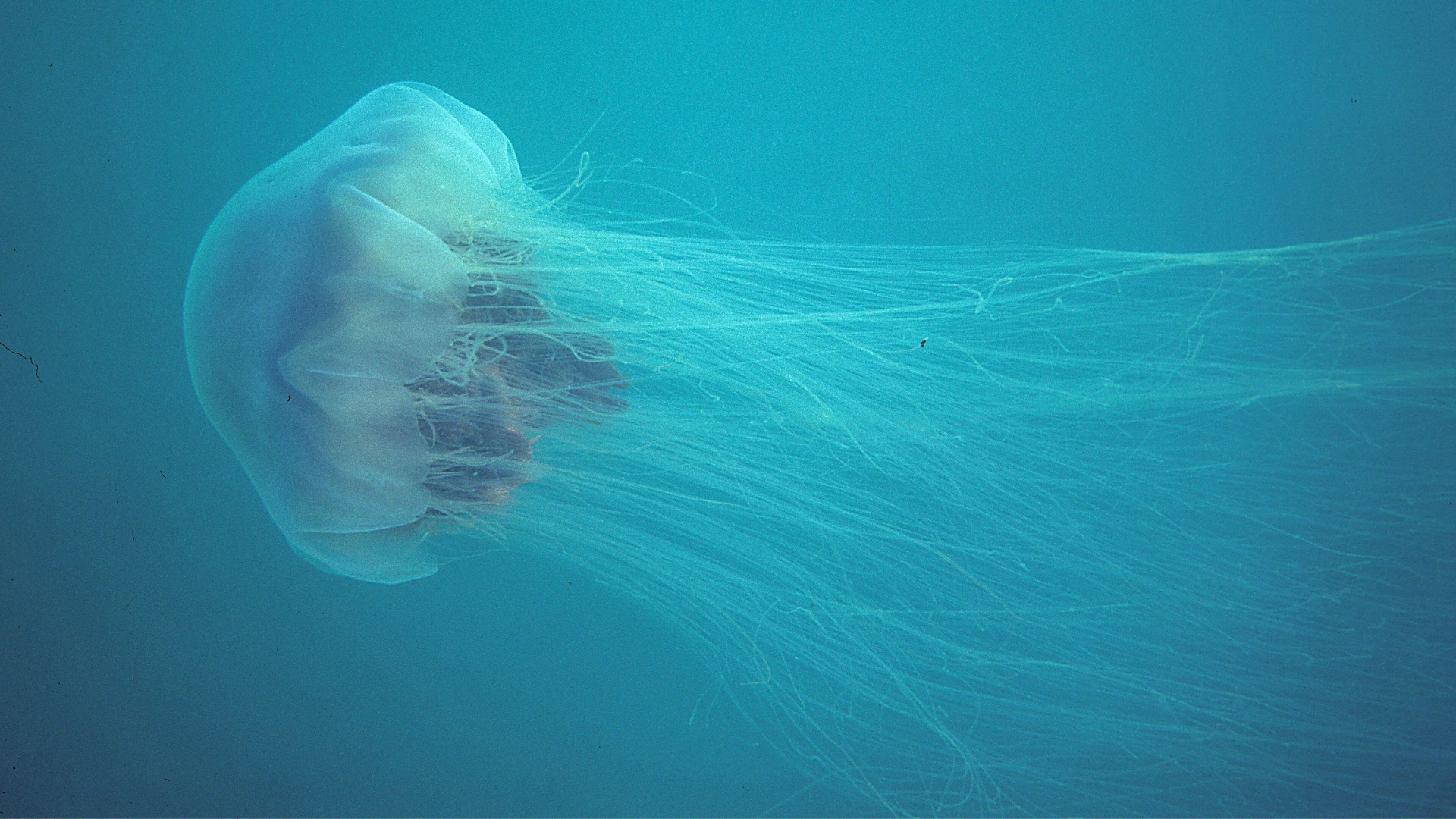
Lion’s Mane Jellyfish | Image Credit : Flickr | Image By : Derek Keats
The Lion’s Mane Jellyfish is a member of the Cyaneidae family, which is the largest species among all the jellyfish species. Their sting is quite painful when compared to lion bites. These jellies also known as Giant Jellyfish, Arctic Red Jellyfish, and Hair Jelly. Giant jellyfish may found in cooler regions of the Atlantic, Pacific, North Sea, and Baltic Sea. The underside of its bell-shaped body is covered and hanging with long, hair-like tentacles. There 8 group tentacles are made up of 70 to 150 strands and can grow to reach 120 feet long. These long tentacles helps to catch prey and their seekers list includes fish, zooplankton, sea creatures, and small jellyfish. They can survive at a depth of up to 66 feet below the surface level. The Lion’s Mane Jellyfish has an unusual length, which is more than the size of a blue whale. These jellyfish are known as the world’s longest creatures.
The ocean is an amazing place that is home to some fearsome sea monsters. These behemoths are legends in themselves.